
semi truck manual transmission
Semi truck manual transmissions, historically dominant, are still relevant today, though facing competition․ Common types include 10, 13, and 18-speed options, alongside light, medium, and heavy-duty variants․
Historical Overview of Manual Transmissions in Semi Trucks
Early semi-trucks relied entirely on manual transmissions, demanding significant driver skill․ These initial systems were relatively simple, often featuring fewer gears – typically 5 or 6 – compared to modern standards․ As trucking evolved and engine technology advanced, the need for more precise gear ratios arose to optimize power and fuel efficiency․
The introduction of 10-speed manual transmissions marked a pivotal moment, becoming a widespread standard for decades․ Later, 13 and 18-speed versions emerged, offering even greater control, especially for heavy loads and varied terrain․ While automatic transmissions are gaining traction, the manual transmission’s legacy remains deeply ingrained in the industry, representing a period of driver expertise and mechanical connection․
Why Manual Transmissions Remain Relevant
Despite the rise of automatics, manual transmissions still hold appeal for several reasons․ Many drivers prefer the greater control and direct connection they offer, particularly when navigating challenging conditions or maximizing fuel efficiency․ Experienced operators often find manual transmissions more engaging and satisfying to drive․
Furthermore, manual transmissions generally have lower upfront costs and can be less expensive to repair than their automatic counterparts․ While phasing out, they remain common in older fleets and are still favored by owner-operators․ The ability to precisely manage engine braking also contributes to their continued relevance, enhancing safety and reducing wear on wheel brakes․

Types of Semi Truck Manual Transmissions
Semi truck manual transmissions vary in gear count, including 10-speed, 13-speed, and 18-speed options, categorized further by light, medium, and heavy-duty applications․
10-Speed Manual Transmissions
Ten-speed manual transmissions represent a longstanding standard in the trucking industry, offering a balance between simplicity and versatility․ While still prevalent, particularly in older fleets, they are gradually being superseded by newer technologies․ Many drivers appreciate their straightforward operation, but some note that at certain highway speeds, the engine can feel somewhat strained or “strangled” due to gear spacing․
These transmissions are generally found in a range of applications, though they are becoming less common as fleets upgrade․ They provide a good compromise for drivers needing a manual system without the complexity of higher gear counts․ Despite the shift towards automatics, the 10-speed remains a functional and reliable option for many trucking operations․
13-Speed Manual Transmissions
Thirteen-speed manual transmissions are frequently favored by drivers seeking improved highway performance compared to their 10-speed counterparts․ The additional gear offers tighter ratios, allowing the engine to operate within its optimal power band more consistently at cruising speeds․ This results in reduced engine strain and potentially better fuel economy on long hauls․
Many experienced truckers express a preference for the 13-speed, citing its ability to maintain comfortable engine RPMs without excessive shifting․ While requiring more skill to operate effectively, the benefits in terms of drivability and efficiency make it a popular choice for over-the-road applications․ They represent a sweet spot between complexity and performance․
18-Speed Manual Transmissions
Eighteen-speed manual transmissions represent the pinnacle of gear ratio options in traditional semi-truck setups․ These complex transmissions offer an exceptionally wide range, providing optimal gearing for nearly any terrain or load condition․ They are particularly well-suited for heavy hauling and challenging routes, like mountainous regions, where precise gear selection is crucial․
However, the increased number of gears demands a high level of driver proficiency․ Mastering an 18-speed requires significant training and experience to shift smoothly and efficiently․ While offering maximum control, they are becoming less common as automated and automatic options gain popularity, due to the skill required for optimal operation․
Light-Duty Manual Transmissions
Light-duty manual transmissions are designed for semi-trucks operating with lighter loads and on relatively flat terrain․ These transmissions typically feature fewer gears – often 5, 6, or 8-speed configurations – simplifying operation compared to their heavier-duty counterparts․ They are commonly found in regional haul applications or trucks used for shorter distances where maximizing gear ratios isn’t as critical․
While offering reduced complexity, light-duty manuals may require more frequent shifting to maintain optimal engine RPMs when encountering inclines or heavier loads․ They represent a cost-effective solution for specific applications, prioritizing ease of use over the ultimate in gear selection versatility․
Medium-Duty Manual Transmissions
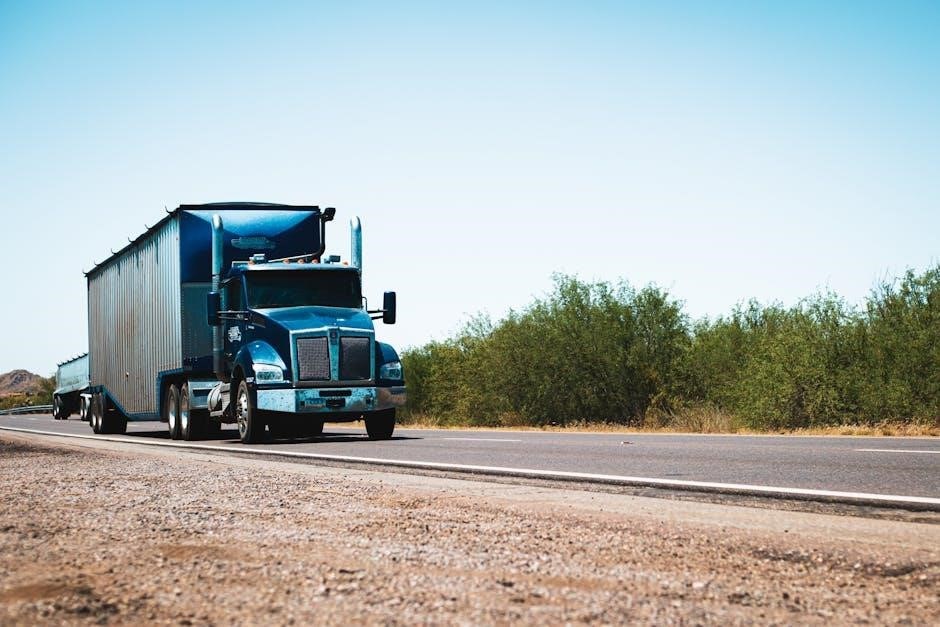
Medium-duty manual transmissions strike a balance between capability and complexity, often featuring 9 or 10-speed configurations․ These transmissions are well-suited for a broader range of applications than light-duty models, handling moderate loads and varied terrain effectively․ They are frequently found in trucks engaged in regional hauling, less-than-truckload (LTL) deliveries, and applications requiring a versatile gear selection․
Compared to heavy-duty options, medium-duty manuals offer a slightly simpler driving experience while still providing sufficient gear ratios for efficient operation․ They represent a practical choice for fleets seeking a balance between performance, cost, and driver comfort․
Heavy-Duty Manual Transmissions
Heavy-duty manual transmissions, typically 13 or 18-speed configurations, are engineered for the most demanding applications․ These robust transmissions are essential for long-haul trucking, transporting heavy loads across challenging terrains, and maximizing fuel efficiency under strenuous conditions․ They provide a wide range of gear ratios, allowing drivers to maintain optimal engine RPMs regardless of speed or load․
These transmissions demand a higher level of driver skill due to their complexity, but offer superior control and durability․ They remain a popular choice for owner-operators and fleets prioritizing performance and longevity, despite the increasing prevalence of automated options․

Key Components of a Semi Truck Manual Transmission
Essential components include the main shaft, countershaft, gears with varying ratios, a robust clutch system, and precise shift linkage for smooth operation and control․
Main Shaft and Countershaft
The main shaft is the central rotating component within a semi truck’s manual transmission, directly connected to the output flange and ultimately, the driveshaft․ It transmits power from the engine, through the gears, to the wheels․ The countershaft, also known as the layshaft, runs parallel to the main shaft and plays a crucial role in gear selection․
It receives power from the input shaft and distributes it to various gears on the main shaft․ Different gear ratios are achieved by engaging different sets of gears on both shafts․ The countershaft’s position and the arrangement of gears allow for multiple forward and reverse speeds․ Proper alignment and lubrication of both shafts are vital for efficient power transfer and longevity of the transmission․
Gears and Gear Ratios
Gears within a semi truck manual transmission are meticulously designed to provide a range of speed and torque options․ Gear ratios determine the relationship between engine speed and wheel speed, impacting both power and efficiency․ Lower gear ratios offer increased torque for starting and climbing hills, while higher ratios prioritize fuel economy at cruising speeds․
Transmissions like 10, 13, and 18-speed models utilize various gear combinations to achieve these ratios․ Each gear set on the main and countershafts contributes to a specific ratio․ Selecting the appropriate gear is crucial for optimizing engine performance and minimizing stress on the drivetrain․ Understanding gear ratios is fundamental for efficient and safe operation․
Clutch System
The clutch system is a vital component of any semi truck manual transmission, acting as the link between the engine and the gearbox․ Its primary function is to smoothly engage and disengage power transmission, allowing for gear changes․ A typical clutch consists of a clutch disc, pressure plate, and release bearing․
When the clutch pedal is depressed, the pressure plate releases, disengaging the clutch disc from the flywheel․ This interruption allows the driver to select a different gear․ Releasing the pedal re-engages the clutch, transferring power․ Proper clutch operation is essential for preventing wear and tear, and ensuring smooth shifting․ Maintaining the clutch system is critical for overall transmission health․
Shift Linkage
The shift linkage is the mechanical system connecting the shift lever inside the cab to the internal shifting mechanisms within the transmission․ It translates the driver’s movements into precise gear selections․ This system typically involves a series of rods, levers, and joints, carefully engineered for accurate and reliable operation․
A well-maintained shift linkage is crucial for smooth and effortless gear changes․ Wear or damage to any component can result in sloppy shifting, difficulty selecting gears, or even complete failure․ Regular inspection and lubrication of the linkage are essential preventative measures․ Proper adjustment ensures optimal performance and minimizes driver fatigue․
Operating a Semi Truck Manual Transmission
Mastering a manual transmission requires precise shifting techniques, including double clutching, and skillful hill starts and downshifting for optimal control and efficiency․
Proper Shifting Techniques
Executing smooth gear changes in a semi-truck manual transmission demands a coordinated sequence of actions․ Begin by depressing the clutch pedal fully, simultaneously removing your foot from the accelerator․ Carefully select the next appropriate gear using the shift lever, ensuring a positive engagement․
Gradually release the clutch while simultaneously applying pressure to the accelerator․ Synchronization is key; releasing the clutch too quickly can cause jerking, while delaying acceleration can lead to stalling․ Anticipate road conditions and traffic flow to proactively select the correct gear, minimizing unnecessary shifting․
Consistent practice refines muscle memory, enabling quicker and smoother transitions between gears, ultimately enhancing both driver comfort and fuel efficiency․ Remember to listen to the engine – it will tell you when a shift is needed!
Double Clutching Explained
Double clutching, a traditional technique for semi-truck manual transmissions, synchronizes the engine and transmission speeds during gear changes․ After depressing the clutch and shifting to neutral, release the clutch briefly․ This “float” allows the engine’s rotational speed to match the transmission’s input shaft speed․
Depress the clutch again, then select the desired gear․ Releasing the clutch smoothly while applying throttle creates a seamless transition․ While less crucial in modern transmissions with synchronizers, double clutching reduces wear and tear on gear components․
It’s a skill that demonstrates a deep understanding of the mechanical process, offering smoother shifts and potentially extending the transmission’s lifespan, even if not always strictly necessary today․

Hill Starts and Downshifting
Hill starts with a manual semi-truck require precise coordination․ Utilize the parking brake to prevent rollback, then smoothly engage the clutch and apply throttle as you release the brake․ Mastering this prevents stalling and ensures controlled movement uphill․
Downshifting is crucial for maintaining control on descents․ Select a lower gear to utilize engine braking, reducing reliance on the service brakes and preventing overheating․ Anticipate the need to downshift before steep inclines or when speed decreases․
Proper downshifting minimizes brake fade and maximizes safety, especially with heavy loads․ It’s a fundamental skill for navigating varied terrain efficiently and responsibly․

Maintenance and Troubleshooting
Regular inspection, fluid checks, and addressing common issues like shifting problems are vital for semi-truck manual transmission longevity and reliable operation․
Regular Inspection Points
Consistent inspection is crucial for maintaining a semi-truck’s manual transmission․ Focus on the clutch system, checking for smooth engagement and any signs of slippage or unusual noises․ Inspect shift linkage for proper operation, ensuring clean and precise gear changes․
Examine the transmission housing for leaks – oil spots indicate potential seal failures․ Regularly check fluid levels and condition; dark or metallic-flecked fluid signals internal wear․ Inspect the U-joints and driveshaft for play or damage, as these components directly impact transmission health․ Don’t overlook the mounting bolts, ensuring they are tight to prevent vibration and stress․
Finally, listen for unusual sounds during operation, which could indicate developing problems․ Proactive inspection prevents costly repairs and downtime․
Common Issues and Their Solutions
Difficulty shifting often stems from low transmission fluid, a worn clutch, or issues with the shift linkage – check fluid levels and linkage adjustments first․ Grinding gears usually indicates improper synchronization; double-clutching techniques can mitigate this, but may signal internal damage․
Clutch slippage points to a worn clutch disc, requiring replacement․ Oil leaks frequently originate from worn seals, necessitating seal replacement․ Unusual noises, like whining or clunking, can indicate worn gears or bearings, demanding professional inspection․
Broken shift forks prevent gear engagement, requiring transmission disassembly and repair․ Regular maintenance and prompt attention to early symptoms can prevent these issues from escalating into major, costly overhauls․
Fluid Checks and Changes
Regular fluid checks are crucial for semi truck manual transmission health․ Inspect the fluid level using the dipstick while the engine is warm and level; it should be within the designated range․ Fluid color is also important – healthy fluid is typically amber, while dark or cloudy fluid indicates contamination․
Fluid changes should follow the manufacturer’s recommendations, typically every 50,000 to 100,000 miles, or annually․ Use the correct transmission fluid type specified in your vehicle’s manual․ During a fluid change, inspect for metal shavings, a sign of internal wear․
Proper disposal of used transmission fluid is essential for environmental responsibility․ Neglecting fluid maintenance can lead to premature wear, shifting problems, and ultimately, transmission failure․
The Future of Manual Transmissions
Semi truck transmissions are evolving, with automatic and automated manual transmissions gaining popularity․ Planetary automatics and dual-clutch systems represent key technological advancements․
The Rise of Automatic and Automated Manual Transmissions
Automatic transmissions are increasingly prevalent in semi-trucks, driven by factors like driver shortages and ease of operation․ These systems reduce driver fatigue and lower the barrier to entry for new drivers․ However, the shift isn’t solely towards fully automatic systems․
Automated Manual Transmissions (AMTs) offer a compelling middle ground․ They retain the mechanical efficiency of a manual transmission but automate the clutch and shifting processes․ This provides fuel economy benefits closer to manuals while simplifying operation․ AMTs are becoming a popular choice for fleets seeking a balance between efficiency and driver comfort․
The adoption rate continues to climb as technology improves, addressing earlier concerns about reliability and cost․ These advancements signal a significant change in the landscape of semi-truck drivetrains․
Planetary Automatic Transmissions
Planetary Automatic Transmissions (PATs) represent a significant advancement in heavy-duty truck technology․ Unlike traditional automatic transmissions, PATs utilize a planetary gearset to achieve different gear ratios․ This design contributes to a more compact and efficient transmission, offering improved power transfer and reduced weight․
PATs are known for their smooth shifting and durability, making them well-suited for the demanding conditions of long-haul trucking․ They often incorporate electronic controls for optimized shift points and performance․ These transmissions are becoming increasingly common as fleets prioritize fuel efficiency and reduced maintenance costs․
The robust construction and advanced features of PATs position them as a key component in modern semi-truck drivetrains, offering a compelling alternative to both manual and traditional automatic options․
Dual-Clutch Transmissions
Dual-Clutch Transmissions (DCTs) are emerging as a sophisticated option in the semi-truck landscape, bridging the gap between manual and automatic systems․ They employ two separate clutches for odd and even gears, enabling incredibly fast and seamless gear changes without interrupting power delivery․
This technology results in enhanced fuel efficiency and improved acceleration compared to traditional automatic transmissions․ DCTs offer a more engaging driving experience, closely mimicking the control of a manual gearbox while eliminating the need for constant clutch operation․
Although currently less prevalent than PATs, DCTs are gaining traction as manufacturers refine the technology and address concerns regarding complexity and cost․ They represent a forward-thinking approach to semi-truck transmissions․
Comparing Manual vs․ Automatic Transmissions
Manual transmissions demand skilled drivers, while automatic transmissions prioritize ease of use․ Fuel efficiency and driver training are key considerations when choosing between them․
Fuel Efficiency Considerations
Fuel efficiency is a critical factor for trucking operations, significantly impacting profitability․ Historically, manual transmissions were often favored for their potential to maximize fuel economy when expertly operated․ A skilled driver could precisely control gear selection, optimizing engine RPMs for the load and terrain․
However, modern automatic and automated manual transmissions (AMTs) are rapidly closing, and in some cases surpassing, the fuel efficiency of manuals․ These advanced systems utilize sophisticated algorithms to make optimal shifting decisions, often exceeding human capabilities․
The gap narrows further with driver training; consistently achieving manual transmission’s peak efficiency requires considerable skill․ Ultimately, the best choice depends on driver proficiency, route characteristics, and the specific technology integrated into each transmission type․
Driver Skill and Training
Operating a semi truck with a manual transmission demands a high level of driver skill and comprehensive training․ Mastering techniques like double clutching, precise shifting, and anticipating road conditions are crucial for smooth operation and longevity of the equipment․
Unlike automatic transmissions, manuals require constant driver engagement, demanding coordination and quick reflexes․ Proper training emphasizes efficient gear selection to optimize engine performance and minimize wear and tear․ Hill starts and downshifting necessitate specific skills to prevent rollback or overspeeding․
As manual transmissions become less common, finding adequately trained drivers presents a challenge for fleets․ Investing in robust training programs is vital to ensure safe and efficient operation, maximizing the benefits of this traditional technology․